Best Digital Marketing Agencies in Nashville & Middle Tennessee (2026)
August 11, 2026


If you’ve checked your website’s Google rankings lately and wondered what’s going on, you’re not alone. Throughout 2026, businesses have seen unexpected ranking fluctuations, inconsistent SEO reports, and sudden changes in keyword visibility.
But here’s what many business owners don’t realize: not every ranking drop means your website is actually performing worse.
Between Google’s algorithm updates, disruptions affecting third-party SEO tools, and reporting issues within Google Search Console, understanding your website’s true search performance has become more complicated.
Before making major changes to your SEO strategy, it’s important to understand what’s behind these fluctuations and how to distinguish genuine performance changes from reporting issues.
Google regularly updates its search algorithms to improve the quality and relevance of search results. Some changes are relatively minor, while larger core and spam updates can affect where websites appear in search.
According to Google’s official Search Status Dashboard, the following major updates have been announced throughout 2026:
Core updates can change how Google evaluates and prioritizes content, potentially causing some websites to gain visibility while others lose positions. Spam updates focus on improving Google’s ability to identify content and practices that violate its spam policies.
However, a ranking decline during a spam update doesn’t automatically mean your website received a penalty or manual action. Likewise, a drop during a core update doesn’t necessarily indicate that your content is poor.
Google’s search results are constantly changing, and fluctuations can occur even without a major update.
The important question is whether an update actually affected your website or whether something else is influencing the rankings you’re seeing.
Google’s algorithm updates aren’t the only reason businesses have experienced confusing SEO reports in 2026.
Many businesses and marketing agencies use third-party tools such as Semrush, Ahrefs, SE Ranking, and other platforms to monitor keyword rankings. These tools collect search results data to estimate where websites appear for specific search terms.
However, collecting that data has become increasingly challenging.
In October 2026, Search Engine Roundtable reported widespread disruptions affecting third-party rank-tracking platforms.
Industry reports described several problems, including:
Several SEO platforms acknowledged these disruptions, although the extent of the problems varied between providers. Some also implemented fixes to improve reporting accuracy.
It’s important to note that claims about Google intentionally altering results for automated tools come from industry investigations and third-party providers, not a confirmed public explanation from Google.
Imagine your business consistently appears among Google’s top five results for an important service keyword.
Suddenly, your SEO report shows that keyword has dropped to position 40 or disappeared entirely.
Naturally, that looks concerning.
But if the tracking platform couldn’t accurately retrieve Google’s search results, the reported decline might not reflect your website’s actual visibility.
This doesn’t mean every unexpected ranking change is a reporting error. It means businesses should avoid making major SEO decisions based on a single ranking report without examining the bigger picture.
Even Google’s own reporting platform, Google Search Console, has experienced data issues during 2026.
Search Console provides website owners with information about how their websites perform in Google Search, including impressions, clicks, and average positions.
According to Google’s official Search Console Data Anomalies documentation, several notable reporting changes and issues occurred during the year:
These examples highlight an important distinction: a change in reported performance doesn’t always mean a corresponding change in actual search visibility.
It’s also important to understand which reports are affected. An issue involving Google Discover, for example, doesn’t automatically mean the standard Google Search results report is inaccurate.
Businesses should consider the type of data, the reporting period, and any documented issues before drawing conclusions about their website’s performance.
Keyword rankings are valuable, but they’re only one part of measuring SEO performance.
Google’s search results can vary based on location, device, search history, and other factors. A website might appear in the top three results for one searcher and farther down the page for another.
Different reporting tools may also calculate or collect ranking positions differently, which can make comparisons confusing.
That’s why businesses should evaluate several performance indicators together.
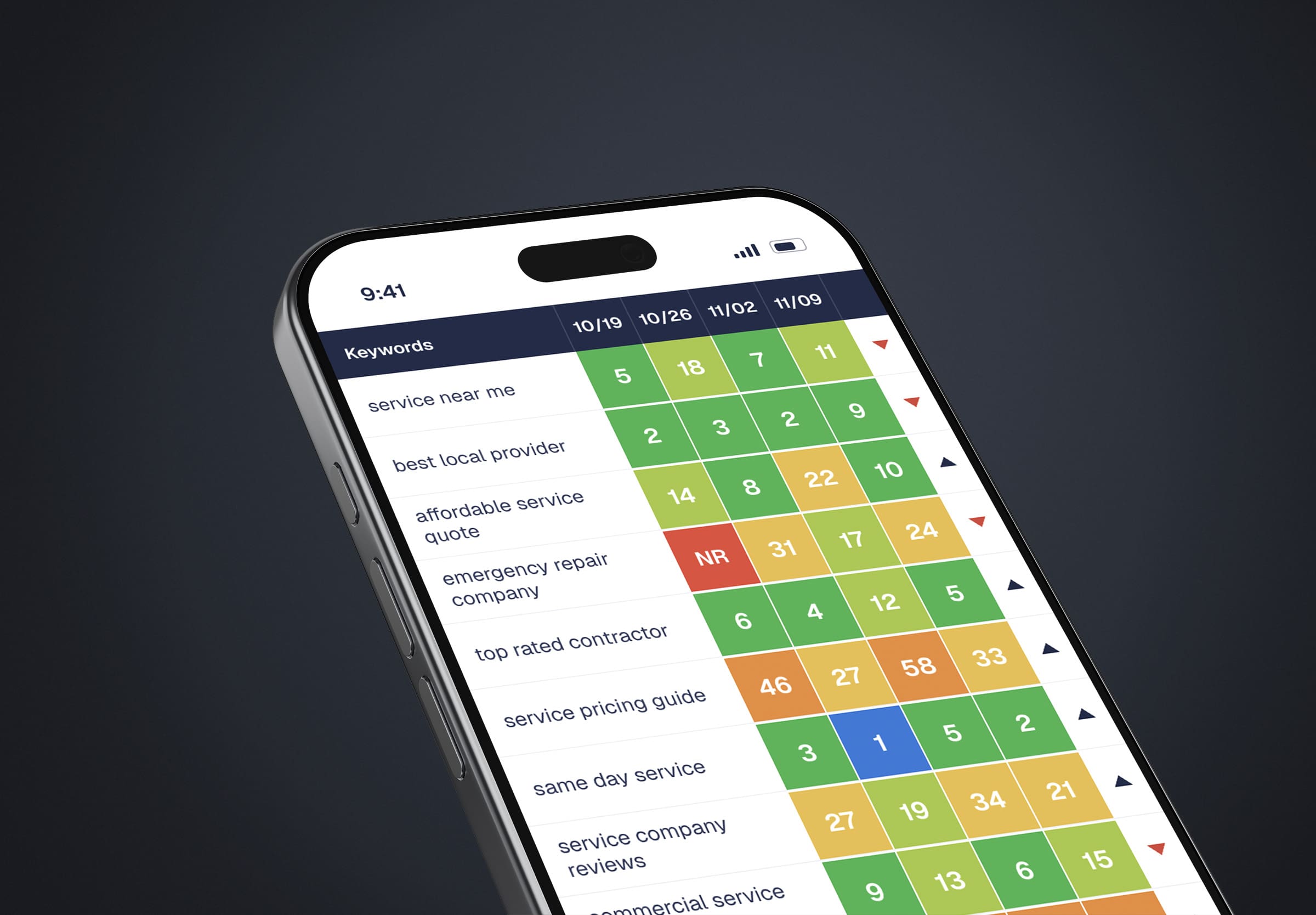
These show where your website appears for specific search terms. They’re useful for identifying trends, but individual positions can fluctuate.
Impressions indicate how often your website appears in eligible search results. They help measure visibility, although changes in reporting methods or data collection can affect the numbers.
Organic traffic shows how many visitors reach your website through unpaid search results. Comparing website analytics with Search Console clicks can help identify whether ranking changes are affecting actual visits.
Ultimately, businesses need more than rankings and website traffic. Phone calls, contact forms, appointments, purchases, and other meaningful conversions help demonstrate whether SEO is contributing to business growth.
For example, a business might lose positions for several keywords that rarely generate inquiries while maintaining strong visibility for searches that consistently bring in customers.
Although its ranking report might look worse, its overall business performance could remain healthy.
At JLB, we believe businesses should have a clear understanding of how their SEO is performing. That’s why our WebLife™ Dashboard brings keyword rankings, search visibility, website traffic, and lead activity together in one place, helping clients see the bigger picture beyond individual ranking changes.
If your SEO report suddenly shows a significant decline, don’t panic or immediately start changing your website.
Instead, investigate what’s happening.
Google’s official guide to debugging search traffic drops recommends reviewing performance patterns, technical issues, algorithm updates, and changes in search demand before deciding what action to take.
Here are five important steps.
Compare the timing of your ranking changes with Google’s official update history.
If a decline occurred during a major core update, the two events could be related.
However, timing alone doesn’t establish that an algorithm update caused the decline. Look for consistent patterns across important pages and keywords before reaching that conclusion.
Review keyword rankings alongside Google Search Console, website analytics, and lead activity.
For example:
No single metric provides a complete answer, but comparing them can help determine whether a reported decline reflects a larger problem.
Is the decline happening across your entire website or only a handful of keywords?
If your most important service pages are losing visibility and traffic consistently, that deserves closer attention.
However, if a few low-volume keywords fluctuate while the rest of your website remains stable, immediate changes may not be necessary.
Not every genuine ranking decline is caused by a Google algorithm update.
Technical problems such as broken redirects, indexing errors, accidental noindex settings, and server issues can prevent search engines from accessing or displaying important pages.
Regular website maintenance and technical oversight can help identify and resolve these problems.
Finally, look beyond the ranking report.
Are fewer potential customers reaching your website? Have inquiries decreased? Are your most important pages generating fewer conversions?
If multiple reliable data sources indicate a sustained decline, a deeper SEO investigation may be necessary.
If the only concerning metric comes from a tracking platform experiencing known disruptions, continued monitoring may be the better approach.
Google’s algorithms and reporting platforms will continue evolving, but not every ranking change requires immediate action.
The key is knowing when to investigate and when to continue monitoring. By focusing on long-term trends, maintaining a technically sound website, and evaluating traffic and leads alongside keyword rankings, businesses can make informed SEO decisions without reacting to every fluctuation.
If your Google rankings have been all over the place in 2026, don’t assume your SEO strategy has stopped working.
Between algorithm updates, third-party tracking disruptions, and reporting changes, understanding search performance requires looking beyond individual keyword positions.
At JLB, we help businesses understand their SEO performance, identify opportunities for improvement, and develop strategies focused on long-term search visibility and qualified leads.
Contact JLB to discuss your SEO performance and how our team can help your business stay competitive as Google Search continues to evolve.
Website design services & digital marketing tailored for user experience and
attracting the right traffic for you with support-that-matters!