Best Digital Marketing Agencies in Nashville & Middle Tennessee (2026)
August 11, 2026


For years, businesses have focused on a familiar question:
Can customers find us online?
AI-powered search adds another question that has become just as important:
If someone finds our business through AI, is the information accurate?
Platforms such as ChatGPT, Google’s AI-powered search experiences, Claude, and Perplexity can give potential customers a quick summary of a company without requiring them to visit several websites first. Depending on the question, that answer might include services, locations, specialties, or other details about the business, but the information isn’t always accurate.
This creates a new challenge for businesses. Appearing in an AI-generated answer is one thing, but being represented correctly is another.
Understanding the difference starts with an AI visibility audit.
Before auditing your business, it helps to understand three related concepts.
AI visibility refers to whether your business appears when someone asks an AI platform a relevant question.
AI citations are the websites, articles, or other sources an AI platform references or links to support the information in its response.
AI accuracy refers to whether the information AI presents about your business in its answers is actually correct.
A business can perform well in one area and poorly in another. For example, an AI platform might mention your company prominently but describe a service you stopped offering two years ago. Another platform might accurately describe your services but leave out an important specialty or location.
The goal shouldn’t simply be to show up in AI search results. Businesses also need to understand how they’re being represented and what information may be contributing to those answers.
One of the simplest ways to begin an AI visibility audit is to approach AI search the way a potential customer might.
Search for your business by name across ChatGPT, Google’s AI-powered search experiences, Perplexity, or your preferred AI search engine. Then move beyond branded searches and try questions related to what customers actually need.
Depending on your business, useful questions might include:
Repeat these searches across multiple platforms rather than relying on a single result.
AI responses can vary based on the platform, model, wording of the question, location, available sources, and when the search is performed. An answer you receive today may also differ from one generated later as platforms and their underlying information change.
An AI visibility audit provides a snapshot of how your business appears at a given time, not a permanent measure of your performance.
As you review the results, compare what AI says with what your business actually does.
Pay particular attention to incorrect or incomplete information about your services, service areas, physical locations, specialties, target customers, leadership, and contact information.
Sometimes the problem isn’t a completely false statement. It’s an incomplete one.
For example, an AI response might correctly identify a company as a commercial contractor but leave out a specialized service that represents a major portion of its business. A professional services firm might be associated with an outdated practice area because old pages or third-party listings are still available online.
These gaps matter because potential customers may use AI-generated answers to decide which businesses to consider.
When an AI platform provides citations or source links, take time to review them.
Open the cited pages and consider whether they accurately represent your business today. Is the information current? Does the page clearly explain the relevant service? Is an outdated directory listing being referenced? Does a third-party article describe your business differently from your own website?
For ChatGPT Search specifically, OpenAI explains that public websites can appear in search results and that allowing OAI-SearchBot access helps make website content eligible to be discovered and cited. However, allowing access doesn’t guarantee your business will appear for a particular question or that one page will determine the answer.
The more useful question during an audit is: What information is available to these platforms, and is that information clear and accurate?
Your website is one of the places where you have the most control over how your company is represented online.
Visitors shouldn’t have to search through multiple pages to understand who you are and what you do. The same principle is important as search engines and AI platforms process information about your business.
Your website should clearly explain:
This information should also be supported by relevant About, service, location, leadership, contact, and FAQ pages.
A well-organized website makes it easier for customers to find information while creating a clearer digital presence for search engines and AI platforms to reference.
JLB’s web design services focus on creating websites that support a positive user experience and a stronger overall digital presence.
Structured data, often called schema markup, provides search engines with additional context about the information on your website.
For example, Google supports Organization structured data to help identify important details about a company and distinguish it from other organizations. Businesses with physical locations can also use LocalBusiness structured data to provide information such as addresses, phone numbers, business hours, and other relevant details.
Structured data should accurately reflect the information visitors can find on your website.
While it can help search engines better understand your business, it doesn’t guarantee your company will appear in AI-generated answers or control how an AI platform describes your services.
Instead, think of structured data as one part of maintaining a clear, accurate, and well-organized online presence.
Your website isn’t the only place where information about your business appears.
Google explains that Business Profile information can come from multiple sources, including business websites, third-party data, user contributions, and information provided by business owners.
Review your Google Business Profile along with other relevant business directories and online listings. Check that important information is accurate and consistent, including:
If an old location has closed, a discontinued service is still listed, or multiple versions of your business name appear online, correcting those details can help create a more consistent digital presence.
It’s also important to consider information beyond your own website and business profiles.
Customer reviews, professional associations, news coverage, local publications, industry websites, and social media profiles can all contribute to how your business is represented online.
This doesn’t mean collecting as many mentions as possible will automatically improve your AI visibility. Instead, consider how consistently your business is represented across the web.
Do reputable sources associate your company with the correct services and locations? Are outdated descriptions still circulating? Is another company with a similar name creating confusion?
These questions can reveal issues that traditional search rankings alone might not uncover.
If an AI platform provides incorrect information about your business, it can be tempting to focus entirely on changing that particular response.
A better first step is to find out where the incorrect information may be coming from.
For example, suppose an AI-generated answer says your business operates in a city where you no longer have an office. Review your website, Google Business Profile, directory listings, old news releases, and other public references for that location.
If the outdated information still exists online, correct it at the source whenever possible.
The same approach applies to discontinued services, outdated leadership information, incorrect phone numbers, and confusion with similarly named businesses.
AI-generated answers can change, and businesses generally cannot dictate exactly what an AI platform will say. However, improving the accuracy and consistency of your online information can help establish a more reliable foundation for how your business is understood.
AI visibility isn’t a one-time project.
Create a small set of questions that reflect how customers search for your company, products, and services. Test them periodically across the AI platforms most relevant to your business and record the results.
For each search, document the platform, date, question, whether your company appeared, how it was described, whether the information was accurate, and which sources were cited when available.
Over time, you’ll have a clearer picture of how often your business appears, which sources AI references, and how accurately your company is represented.
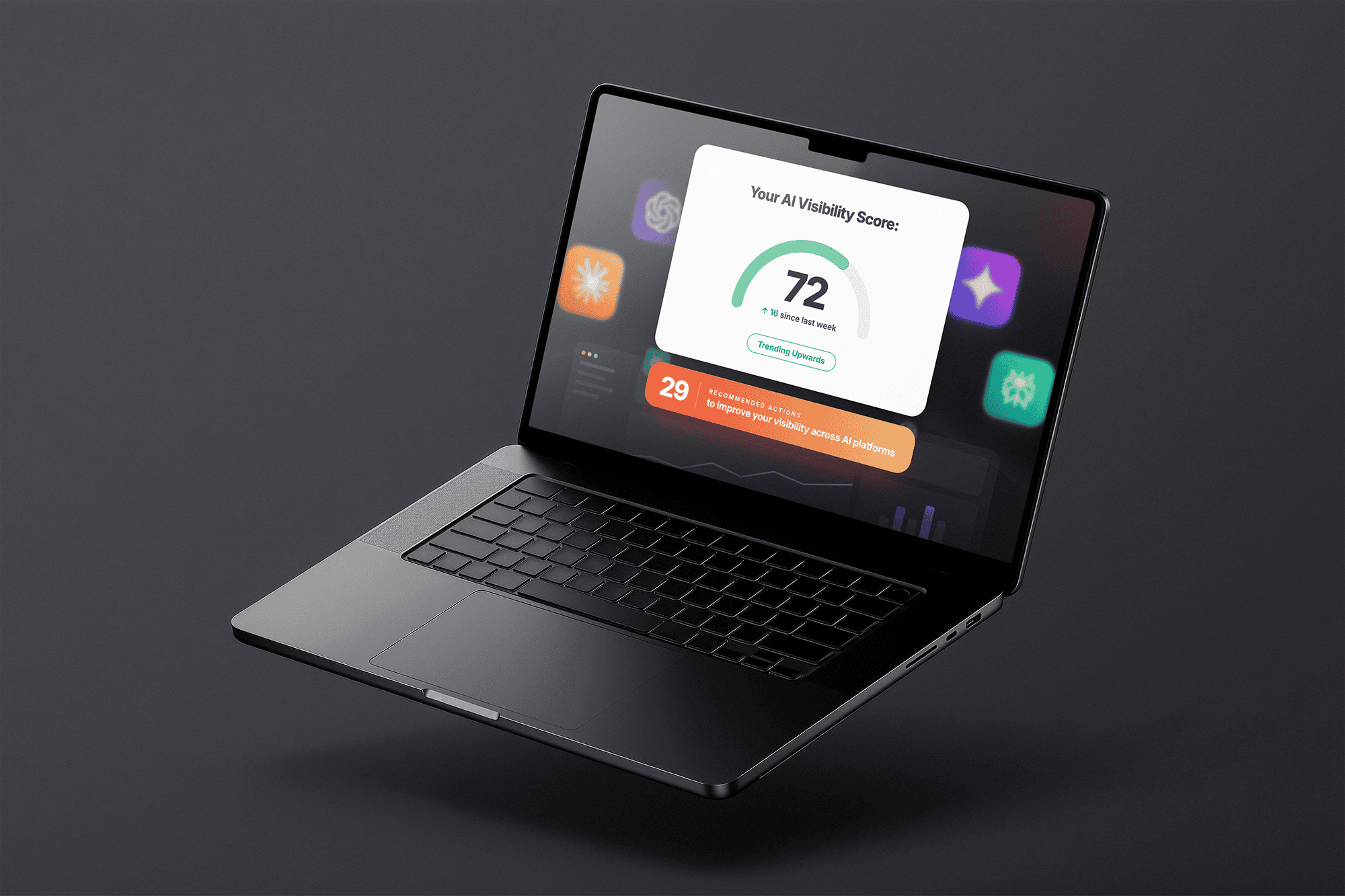
While understanding how to audit your AI visibility is important, manually tracking results across multiple platforms can be time-consuming. For businesses using JLB’s SEO and AI Search Optimization services, clients will have access to an AI Visibility Audit in their WebLife™ Dashboard that helps simplify the process. By tracking how your business appears across major AI platforms, including ChatGPT, Gemini, Claude, Perplexity, and more, the audit makes it easier to monitor your AI search visibility as part of your ongoing digital marketing strategy.
By monitoring these results over time, you can identify changes and investigate potential causes rather than relying on what an AI platform reported several months ago.
Use this simple checklist to get started:
These steps can help you better understand how your business is represented across AI-powered search experiences and where improvements may be needed.
Businesses have spent years working to make sure customers can find them through traditional search engines. AI-powered search adds another layer to that responsibility.
It’s no longer enough to ask, “Does our company appear?”
Businesses should also ask, “Is this an accurate representation of who we are and what we offer?”
A strong digital presence helps provide both customers and search technologies with clear, current information about your company. That means maintaining an informative website, accurate business listings, consistent company details, appropriate structured data, and a broader online presence that reflects what your business does today.
Understanding how AI platforms describe your business is an important first step toward improving your AI search visibility.
JLB’s AI Search Optimization services help businesses build a stronger foundation for visibility across AI-powered search platforms, backed by ongoing research, testing, and in-house expertise.
The objective isn’t to control every AI-generated answer. It’s to make sure the information available about your business gives both AI platforms and potential customers the clearest possible understanding of who you are and what you do.
Website design services & digital marketing tailored for user experience and
attracting the right traffic for you with support-that-matters!